Showing posts with label God. Show all posts
Sunday, 5 September 2010
Value and virtue in a godless universe
Suppose there is no God. This supposition implies that human life is meaningless, that there are no moral obligations and hence people can do whatever they want, and that the notions of virtue and vice, right and wrong, and good and evil have no place in the universe. Erik J. Wielenberg believes this view to be utterly erroneous and, in this thought-provoking book, he explains the reasons why. He argues that, even if God does not exist, human life can still have meaning, humans do have moral obligations, and human virtue is still possible. Wielenberg offers readers a cognent explanation of the ethical implications of naturalism--a view that denies the existence of the supernatural in human life. In his view virtue exists in a godless universe but it is significantly different from virtue in a Christian universe, and he develops naturalistic accounts of humility, charity, and hope. The overarching theme of Virtue and Value in a Godless Universe is what ethics might look like without God. Erik Wielenberg takes readers on an extraordinary tour of some of the central landmarks of this under-explored territory. Amazon
http://rapidshare.com/files/250836856/Value.and.Virtue.in.a.Godless.Universe-Erik.Wielenberg.pdf
Thursday, 26 August 2010
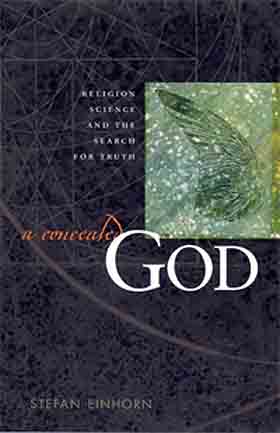
A Concealed God: Religion, Science, and the Search for Truth
A highly concealed god poses two intriguing questions? Does god truly exist? If so, is the concept of god logical and in agreement with the knowledge of the world that science has provided to date? The god presented by most religions doesn't make sense in today's world; we have little room for miracles. Furthermore, there are irreconcilable aspects in the world's religions. Must we abandon our faith or belief in god? Perhaps not, says popular Swedish thinker Stefan Einhorn. We can behave as scientists do when they run experiments only to obtain contradictory results. They ask themselves whether there might not be a logical conclusion that binds all the results together and leads to the most probable explanation. Einhorn hypothesises that if god truly exists, then many different religions would have discovered this. He finds a common denominator in the concept of a hidden god in seven major religions: Judaism, Christianity, Islam, Hinduism, Buddhism, Taoism, and Confucianism. But even with this shared belief, can we know if god exists? Did humankind create the idea of god to answer the unexplainable?
http://www.megaupload.com/?d=NJPE5E1Q
Subscribe to:
Posts (Atom)