From the Scopes “Monkey Trial” of 1925 to the court ruling against the Dover Area School Board’s proposed intelligent design curriculum in 2005, few scientific topics have engendered as much controversy—or grabbed as many headlines—as evolution. And since the debate shows no signs of abating, there is perhaps no better time to step back and ask: What is evolution? Defined as the gradual process by which something changes into a different and usually more complex and efficient form, evolution explains the formation of the universe, the nature of viruses, and the emergence of humans. A first-rate summary of the actual science of evolution, this Scientific American reader is a timely collection that gives readers an opportunity to consider evolution’s impact in various settings.
http://www.filesonic.com/file/1729034591/0226742687Evolution.pdf
Showing posts with label Evolution. Show all posts
Monday, 22 August 2011
Thursday, 4 August 2011
Fins into Limbs: Evolution, Development, and Transformation
Long ago, fish fins evolved into the limbs of land vertebrates and tetrapods. During this transition, some elements of the fin were carried over while new features developed. Lizard limbs, bird wings, and human arms and legs are therefore all evolutionary modifications of the original tetrapod limb.
A comprehensive look at the current state of research on fin and limb evolution and development, this volume addresses a wide range of subjects—including growth, structure, maintenance, function, and regeneration. Divided into sections on evolution, development, and transformations, the book begins with a historical introduction to the study of fins and limbs and goes on to consider the evolution of limbs into wings as well as adaptations associated with specialized modes of life, such as digging and burrowing. Fins into Limbs also discusses occasions when evolution appears to have been reversed—in whales, for example, whose front limbs became flippers when they reverted to the water—as well as situations in which limbs are lost, such as in snakes.
http://www.filesonic.com/file/1592354384/0226313379FinsLimbs.pdf
Friday, 3 December 2010
Surviving 1000 Centuries: Can We Do It?
The circumstances that will shape the long-term future of our planet will be constrained by what is physically possible and what is not. This book provides a quantitative view of our civilization over the next 100,000 years, in comparison to the 40-60,000 years it took for modern humans to emerge from Africa, on the basis of contemporary scientific and technological knowledge. The first 5 chapters provide the general scientific background, starting with a brief history of our planet, from its formation 4.5 billion years ago until the present day. The evolution of the Earth’s atmosphere and the origin of water are highlighted as being the most important factors for the emergence and the development of life, especially in comparison to Earth’s neighbours, Venus and Mars. The authors then consider both cosmic and natural hazards, pointing out that scientific information provided by satellites and communication systems on the ground could prevent many unnecessary casualties by forward planning and the installation of elementary precautions.
http://www.filesonic.com/file/38386727/0387746331Centuries.rar
Monday, 8 November 2010
The Plausibility of Life: Resolving Darwin's Dilemma
We all know Darwin's theory of evolution—natural selection favors some adaptations over others. But where do new adaptations come from? This problem baffled Darwin and is the main point of attack for opponents of evolution. Kirschner and Gerhart, professor at Harvard and UC-Berkeley, respectively, present their solution to the problem and take a few timely shots at the advocates of intelligent design. The key to understanding the development of complex structures, they say, is seeing that body parts as seemingly different as eyes and elbows are formed from the same basic molecular mechanisms. Thus, the authors propose, the metabolic building blocks of life functions can be rearranged and linked in novel ways with less chance of fatal variations than random mutation of DNA would allow.
Saturday, 2 October 2010
Summer for the Gods
If you haven't seen the film version of Inherit the Wind, you might have read it in high school. And even people who have never heard of either the movie or the play probably know something about the events that inspired them: The 1925 Scopes "monkey trial," during which Darwin's theory of evolution was essentially put on trial before the nation. Inherit the Wind paints a romantic picture of John Scopes as a principled biology teacher driven to present scientific theory to his students, even in the teeth of a Tennessee state law prohibiting the teaching of anything other than creationism. The truth, it turns out, was something quite different. In his fascinating history of the Scopes trial, Summer for the Gods, Edward J. Larson makes it abundantly clear that Truth and the Purity of Science had very little to do with the Scopes case. Amazon
http://hotfile.com/dl/62253983/b2b4743/Edward.Larson-Summer.for.the.Gods.rar.html
Wednesday, 22 September 2010
The Making of the Fittest - AUDIOBOOK
What do dolphins, colobus monkeys and microbes have in common with each other? They all demonstrate how deeply evolution is etched in DNA and by looking at popular animals like them, geneticist Sean B. Carroll provides a fascinating insight into the genetic basis for evolution.
http://www.megaupload.com/?d=YTMZVV0W
Your Inner Fish - AUDIOBOOK
Similar to Our Inner Ape, Your Inner Fish shows how, like the fish with elbows, we carry the whole history of evolution within our own bodies, and how the human genome links us with the rest of life on earth.
http://www.megaupload.com/?d=OHDV9OPO
Good Natured: The Origins of Right and Wrong in Humans and Other Animals
Is morality a biological or cultural phenomenon? Can nonhuman animals be humane? Primatologist de Waal (Chimpanzee Politics) explores these questions in a provocative book and makes a strong case for biology. He is convinced that social tendencies come into existence via a genetic calculus rather than rational choice. He defends anthropomorphism, noting that it serves the same exploratory function as intuition in the sciences. He discusses aggression and altruism and offers abundant anecdotal evidence of moral behavior among primates and other animals?food sharing, protection, sympathy, guilt. De Waal argues that the remarkable trainability among certain species, e.g., sheepdogs and elephants, hints at a rule-based order among them. Amazon
http://rapidshare.com/files/404136895/Frans.de.Waal-Good.Natured.rar
Monday, 6 September 2010
Epic of Evolution: Seven Ages of the Cosmos
Only a few hundred years ago, the idea of Earth’s centrality and the reliance on supernatural beings were shattered. During the Renaissance, humans began to inquire more critically about themselves and the Universe. They realized that thinking about Nature was no longer sufficient. Looking at it was also necessary. Experiments became a central part of the process of inquiry. To be effective, ideas had to be tested experimentally, either to refine them if data favored them or to reject them if they did not. The “scientific method” was born—probably the most powerful technique ever conceived for the advancement of factual information. Modern science had arrived.
http://rapidshare.com/files/44890363/0231135602.rar
Sunday, 5 September 2010
Evolution vs. Creationism
The evolution versus creationism conflict is here to stay. Even after their devastating defeat in the Kitzmiller v. Dover decision, advocates of intelligent design and other forms of creationism continue to revise their strategies for undermining the teaching of evolution-and thus of science in general-in American schools. In this revision of Evolution vs. Creationism, Eugenie Scott, one of the leading proponents of teaching evolution in the schools, describes these ever-changing efforts to undermine science education and shows what students, parents, and teachers should be aware of to help ensure that American science education prepares our students to compete in the 21st century.
This second edition of Evolution vs. Creationism will help readers better understand the issues involved in these debates. It expands and updates the original work with an insider's look at the Kitzmiller v. Dover trial, a new selection of primary source documents on the Creationism/Evolution controversy in the media, and an up-to-date analysis of the most recent creationist challenges across the country.
http://www.megaupload.com/?d=O37ZCB7O
This second edition of Evolution vs. Creationism will help readers better understand the issues involved in these debates. It expands and updates the original work with an insider's look at the Kitzmiller v. Dover trial, a new selection of primary source documents on the Creationism/Evolution controversy in the media, and an up-to-date analysis of the most recent creationist challenges across the country.
http://www.megaupload.com/?d=O37ZCB7O
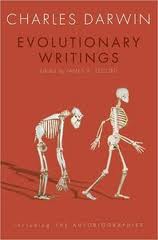
Evolutionary Writings: Including the Autobiographies
On topics ranging from intelligent design and climate change to the politics of gender and race, the evolutionary writings of Charles Darwin occupy a pivotal position in contemporary public debate. This volume brings together the key chapters of his most important and accessible books, including the Journal of Researches on the Beagle voyage (1845), The Origin of Species (1859), and The Descent of Man (1871), along with the full text of his delightful autobiography. They are accompanied by generous selections of responses from Darwin’s nineteenth-century readers from across the world.
More than anything, they give a keen sense of the controversial nature of Darwin’s ideas, and his position within Victorian debates about man’s place in nature.
The wide-ranging Introduction by James A. Secord, Director of the Darwin Correspondence Project, explores the global impact and origins of Darwin’s work and the reasons for its unparalleled significance today. To increase its usefulness for readers coming to Darwin for the first time, the selection also includes a map of the Beagle voyage, a detailed chronology of Darwin’s life, and a biographical appendix identifying every individual mentioned in the text.
http://www.megaupload.com/?d=V0AXO2Z0
More than anything, they give a keen sense of the controversial nature of Darwin’s ideas, and his position within Victorian debates about man’s place in nature.
The wide-ranging Introduction by James A. Secord, Director of the Darwin Correspondence Project, explores the global impact and origins of Darwin’s work and the reasons for its unparalleled significance today. To increase its usefulness for readers coming to Darwin for the first time, the selection also includes a map of the Beagle voyage, a detailed chronology of Darwin’s life, and a biographical appendix identifying every individual mentioned in the text.
http://www.megaupload.com/?d=V0AXO2Z0
The Theory of Evolution: What It Is, Where It Came From, and Why It Works
Everything mammals ever wanted to know about the theory of evolution-but were afraid to ask
This important new book by award-winning science writer Cynthia Mills clearly explains one of the most crucial, and most misunderstood, concepts of modern science-the theory of evolution. After examining Darwin, his precursors, and how the theory of evolution developed, Mills answers key questions, including: How successful is the theory at explaining the natural world, and what does it fail to explain?
What are some of the competing ideas and theories about the origin of the species? How will the theory of evolution likely hold up over time, as our understanding of genetics grows?
http://uploading.com/files/QUCG8SVM/h14.rar.html
Friday, 3 September 2010
THE ORIGINS OF ORDER
Stuart Kauffman here presents a brilliant new paradigm for evolutionary biology, one that extends the basic concepts of Darwinian evolution to accommodate recent findings and perspectives from the fields of biology, physics, chemistry and mathematics. The book drives to the heart of the exciting debate on the origins of life and maintenance of order in complex biological systems. It focuses on the concept of self-organization: the spontaneous emergence of order that is widely observed throughout nature. The work is written for all those interested in the cutting edge of research in the life sciences. Amazon
http://rapidshare.com/files/321281609/The.Origins.Of.Order-Kauffman.pdf
Saturday, 28 August 2010
Darwin and Evolution for Kids
Darwin and Evolution for Kids traces the transformation of a privileged and somewhat scatterbrained youth into the great thinker who proposed the revolutionary theory of evolution. Through 21 hands-on activities, young scientists learn about Darwin’s life and work and assess current evidence of evolution. Activities include going on a botanical treasure hunt, keeping field notes as a backyard naturalist, and tying knots for ship sails like those on the HMS Beagle. Children also learn how fossils are created, trace genetic traits through their family trees, and discover if acquired traits are passed along to future generations. By encouraging children, parents, and teachers to define the differences between theories and beliefs, facts and opinions, Darwin and Evolution for Kids does not shy away from a theory that continues to spark heated public debate more than a century after it was first proposed.
http://rapidshare.com/files/166405616/Darwin_and_Evolution_for_Kids_pdf_1556525028.rar
Evolution: A Scientific American Reader
A first-rate summary of the actual science of evolution, this Scientific American reader is a timely collection that gives readers an opportunity to consider evolution’s impact in various settings.
Divided into four sections that consider the evolution of the universe, cells, dinosaurs, and humans, Evolution brings together more than thirty articles written by some of the world’s most respected evolutionary scientists. As tour guides through the genesis of the universe and complex cells, P. James E. Peebles examines the evidence in support of an expanding cosmos, while Christian de Duve discusses the birth of eukaryotes. In an article that anticipated his book Full House, Stephen Jay Gould argues that chance and contingency are as important as natural selection for evolutionary change. And Ian Tatersall makes two fascinating contributions, submitting his view that the schematic of human evolution looks less like a ladder and more like a bush.
http://www.megaupload.com/?d=2DGA6Z9F
Divided into four sections that consider the evolution of the universe, cells, dinosaurs, and humans, Evolution brings together more than thirty articles written by some of the world’s most respected evolutionary scientists. As tour guides through the genesis of the universe and complex cells, P. James E. Peebles examines the evidence in support of an expanding cosmos, while Christian de Duve discusses the birth of eukaryotes. In an article that anticipated his book Full House, Stephen Jay Gould argues that chance and contingency are as important as natural selection for evolutionary change. And Ian Tatersall makes two fascinating contributions, submitting his view that the schematic of human evolution looks less like a ladder and more like a bush.
http://www.megaupload.com/?d=2DGA6Z9F
Monday, 23 August 2010
What Evolution Is
At age 97, Ernst Mayr is one of the most influential scientists of the 20th century, and here he delivers yet another valuable addition to the field of evolutionary theory. Mayr, who was also a curator at the American Museum of Natural History for two decades, guides lay readers through evolutionary thought from the book of Genesis and creationist theory through Darwin's theories and "soft" evolution and on to more contemporary, inclusive concepts. He takes readers on a whirlwind voyage from the scala naturae (the Great Chain of Being, in which everything in the world was accorded a position in a developmental hierarchy) to Mayr's own work, which builds on Darwinian theory and environmental factors. No one but Mayr could explain evolution so well, and though the text is peppered with many scientific terms, overall the author is triumphant in his goal to teach "first and foremost... biologist or not, [anyone] who simply wants to know more about evolution." Publishers Weekly
http://hotfile.com/dl/56797129/67d58b5/Ernst.Mayr-What.Evolution.Is.rar.html
or
http://rapidshare.com/files/408414931/Ernst.Mayr-What.Evolution.Is.rar.html
http://hotfile.com/dl/56797129/67d58b5/Ernst.Mayr-What.Evolution.Is.rar.html
or
http://rapidshare.com/files/408414931/Ernst.Mayr-What.Evolution.Is.rar.html
Subscribe to:
Posts (Atom)