Thursday, 4 August 2011
On bullshit
One of the most salient features of our culture is that there is so much bullshit," Harry G. Frankfurt writes, in what must surely be the most eyebrow-raising opener in modern philosophical prose. "Everyone knows this. Each of us contributes his share. But we tend to take the situation for granted." This compact little book, as pungent as the phenomenon it explores, attempts to articulate a theory of this contemporary scourge--what it is, what it does, and why there's so much of it. The result is entertaining and enlightening in almost equal measure. It can't be denied; part of the book's charm is the puerile pleasure of reading classic academic discourse punctuated at regular intervals by the word "bullshit." More pertinent is Frankfurt's focus on intentions--the practice of bullshit, rather than its end result. Bullshitting, as he notes, is not exactly lying, and bullshit remains bullshit whether it's true or false. The difference lies in the bullshitter's complete disregard for whether what he's saying corresponds to facts in the physical world: he "does not reject the authority of the truth, as the liar does, and oppose himself to it. He pays no attention to it at all. By virtue of this, bullshit is a greater enemy of the truth than lies are.
http://www.filesonic.com/file/1583911154/On_Bullshit.pdf (yes its in English)
The Invasion from Mars: A Study in the Psychology of Panic
On Halloween night 1938, Orson Welles broadcast a radio adaptation of the H. G. Wells fantasy, The War of the Worlds. What listeners heard sounded so realistic that at least a million were frightened by word that "strange creatures" from Mars had landed in central New Jersey and were "unleashing a deadly assault." Several thousand were so terrified they ran into the streets, drove away in their cars, or called the police for information about how to escape. Why did so many panic when the circumstances reported were so improbable? That is just the question Hadley Cantril, then a young social psychologist, set out to answer. Using a mix of research methods, Cantril shows that the impact of the broadcast had less to do with what went out over the air than with the "standards of judgment" people did or did not use in evaluating what they were hearing.
http://www.filesonic.com/file/1583894354
Marijuana and the Cannabinoids
Marijuana and the Cannabinoids presents a compendium of research into the botany, chemistry, and pharmacology of cannabis and the medicinal aspects of the cannabinoids. While medicinal use of Cannabis sativa L. has been reported for over 5000 years, interest in its medicinal potential and controversy surrounding its illicit use have grown exponentially since the identification of the chemical structure of the plant's active constituent (D9-THC) in 1964. This volume presents the findings of researchers on the forefront of this emerging and controversial field of study.
http://www.filesonic.com/file/1584395834/0739.rar
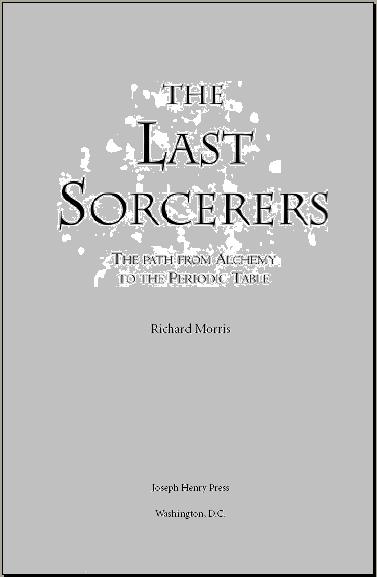
The Last Sorcerers: The Path from Alchemy to the Periodic Table
Though the stories in this volume have been told before in other books, Morris (The Evolutionists; Time's Arrow) manages to make the history of the periodic table's conception fresh and quirky one more time. He does this by focusing his narrative on the early alchemists, who were among the first scientists to investigate the composition of metals and who were widely perceived to be near-sorcerous practitioners of mysterious arts.
http://www.filesonic.com/file/1585982481/2401.rar
String Theory and M-Theory: A Modern Introduction
String theory is one of the most exciting and challenging areas of modern theoretical physics. This book guides the reader from the basics of string theory to recent developments. It introduces the basics of perturbative string theory, world-sheet supersymmetry, space-time supersymmetry, conformal field theory and the heterotic string, before describing modern developments, including D-branes, string dualities and M-theory.
http://www.filesonic.com/file/1584722724/0521860695.djvu
The Science of Astrobiology
Since the publication of The New Science of Astrobiology in the year 2001—the first edition of the present book—two significant events have taken place raising the subject from the beginning of the present century to its present maturity. Firstly, in 2001 the Galileo Mission still had two years to complete its task, which turned out to be an outstanding survey of the Jovian system, especially of its intriguing satellite Europa. Secondly, the Cassini Huygens Mission was still on its way to Saturn. Its present success has surpassed all expectations of ESA and NASA. Astrobiologists still did not know that Titan was the fifth body in the Solar System that possibly contained a water ocean (including the Earth and the three Galilean satellites other than Io). For these reasons the book includes overviews of the evolutionary and molecular biology that are necessary. There is a discussion of other sectors of culture that are the natural frontiers of astrobiology, especially the humanities.
http://www.filesonic.com/file/1586210874/9400716265Astrobiology.pdf
The Neurophysics of Human Behavior
How do brain, mind, matter, and energy interact? Can we create a comprehensive model of the mind and brain, their interactions, and their influences? Synthesizing research from neuroscience, physics, biology, systems science, information science, psychology, and the cognitive sciences, The Neurophysics of Human Behavior advances a unified theory of brain, mind, behavior and information.
http://www.filesonic.com/file/1586872621/2608.rar
Subscribe to:
Posts (Atom)